
At Anglo Spanish Nursery School, our curriculum is based on the statutory Early Years Foundation Stage (EYFS) framework, with a unique bilingual approach that supports both English and Spanish language development alongside cognitive growth.
The foundation of all learning lies in the prime areas:
| 1 | Communication and language |
| 2 | Physical development |
| 3 | Personal, social and emotional development |
In our baby and toddler rooms, we prioritise fostering language skills in both English and Spanish, supporting children as they build strong foundations for future learning. We also focus on personal development, social skills, emotional well-being, and physical growth, as these key areas support progress in other more specific learning areas, from maths and literacy to understanding the world around us and encouraging creativity through art and crafts.

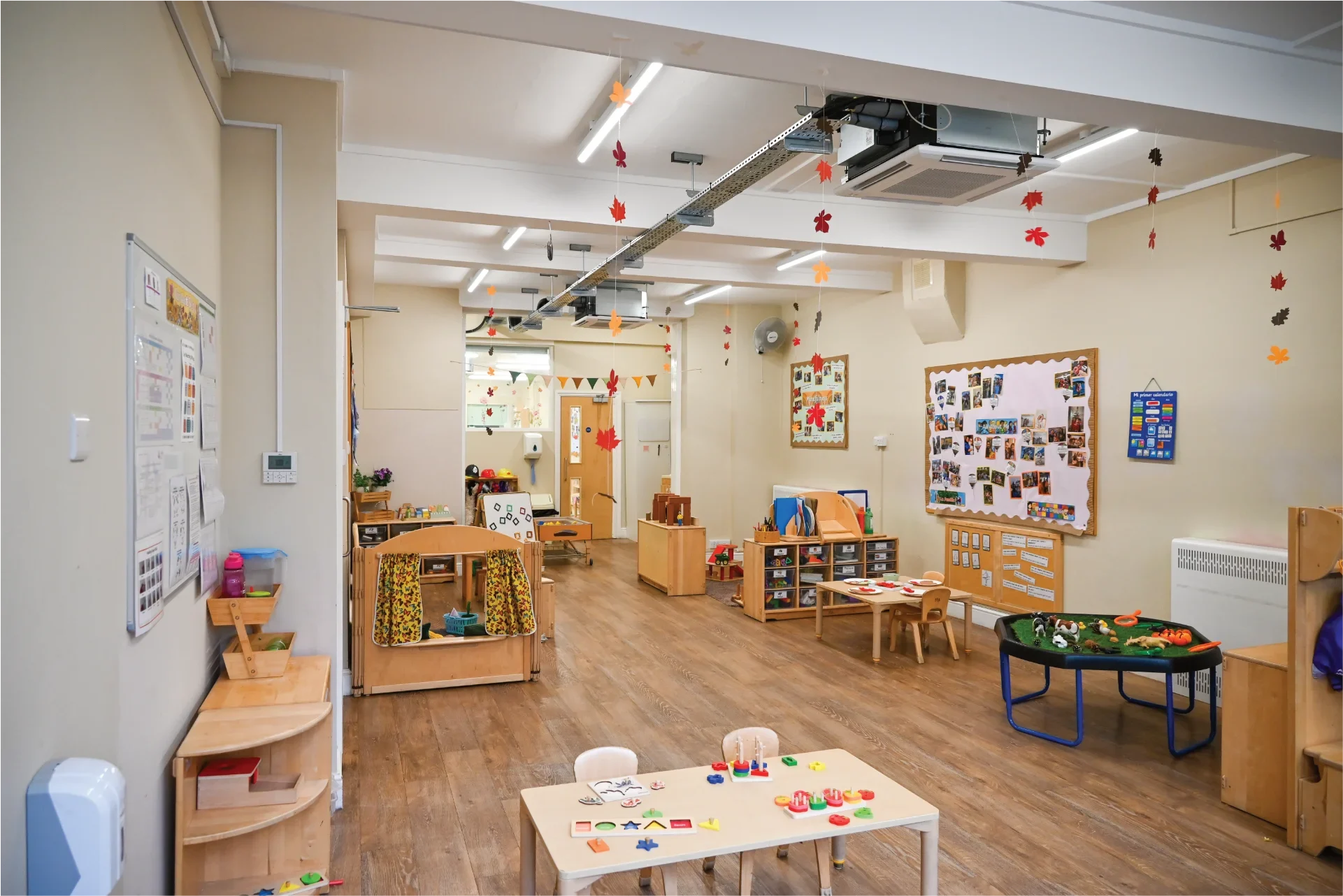
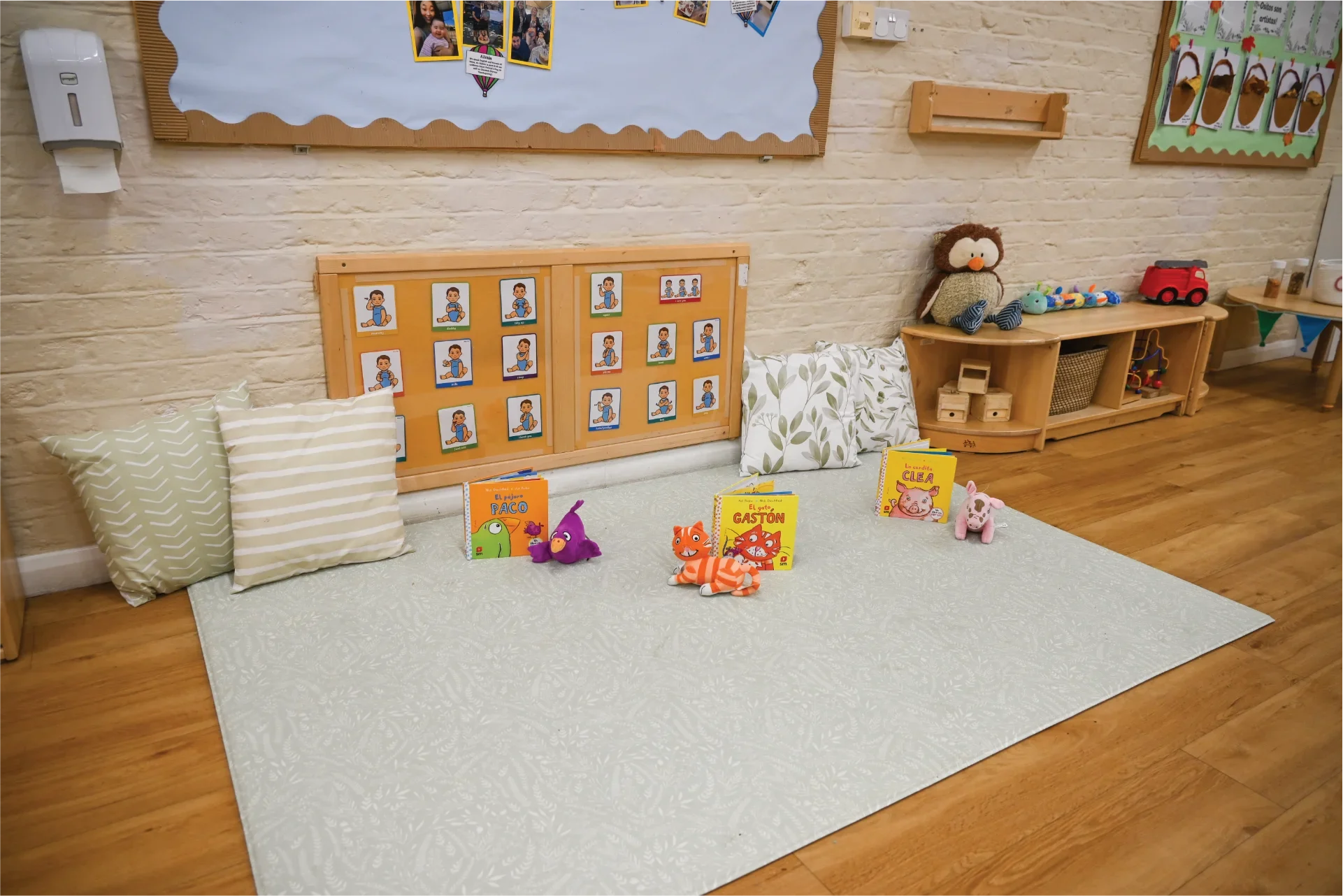
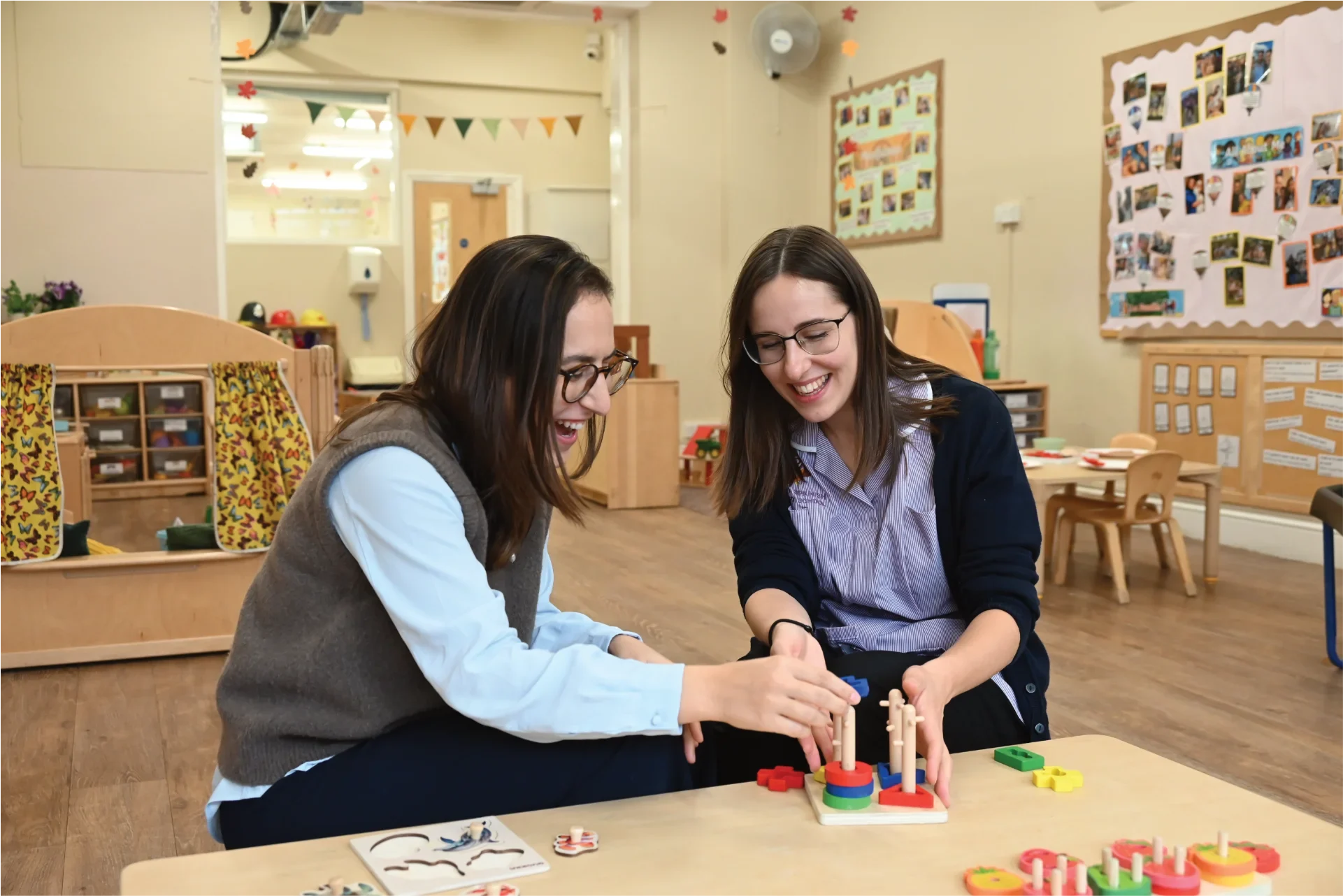
We follow a learning through exploration and discovery approach inspired by the Reggio Emilia philosophy. In this approach, we see children as active participants in their learning journey. Each child is viewed as a “competent and curious learner,” whose natural drive for discovery is nurtured through interactions with their environment, peers, and adults. We provide rich, stimulating experiences where children engage with materials, ideas, and their surroundings to make sense of the world. Teachers act as facilitators, guiding and observing children’s learning, and using these insights to create meaningful experiences that reflect the children’s interests and ideas.
As children progress through the nursery, they begin to engage with Maria Montessori’s theory, which emphasises independent, self-directed learning. In our older classrooms, we introduce Montessori Project Sessions (“Manos a la Obra”), where children take ownership of their learning through hands-on, inquiry-based projects. These sessions encourage children to explore their interests in depth, fostering autonomy, responsibility, and critical thinking.
In the Montessori-inspired environment, children are provided with materials that support concentration, order, and exploration, helping them build confidence as independent learners. This blend of Reggio Emilia and Montessori provides a balanced and holistic approach to early childhood education, where creativity, curiosity, and independence are at the heart of every child’s learning experience.
As part of our comprehensive curriculum, we also offer a variety of specialist programmes designed to enhance early brain development and support the acquisition of important skills.
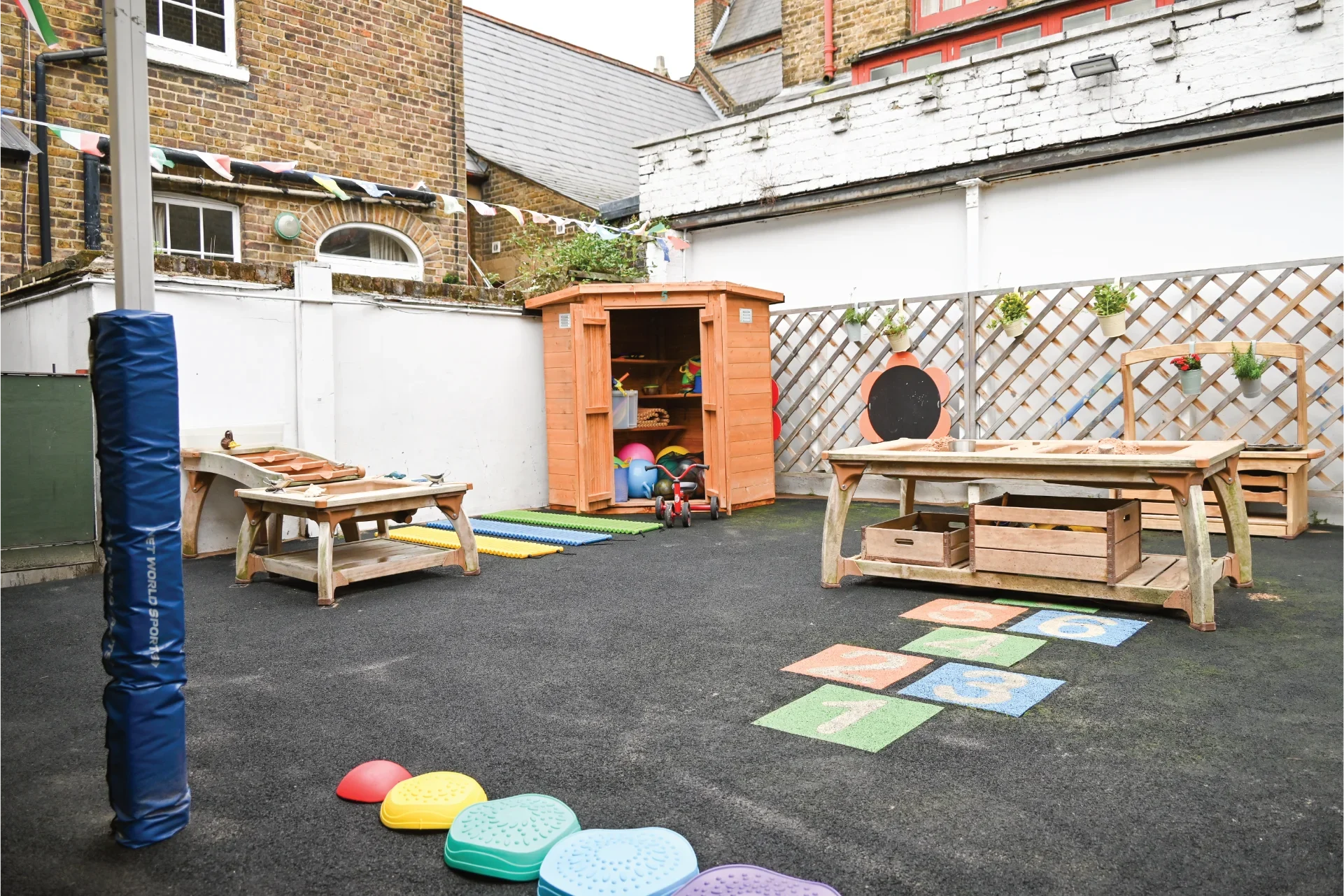

Our specialist programmes
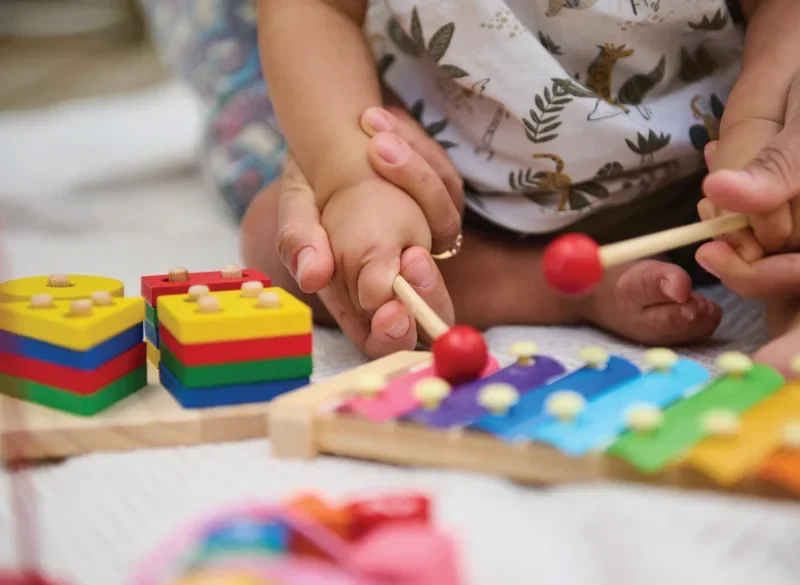
Music Sessions
Fostering creativity, rhythm, and self-expression through music in both languages, helping children explore sounds, melodies, and movement.
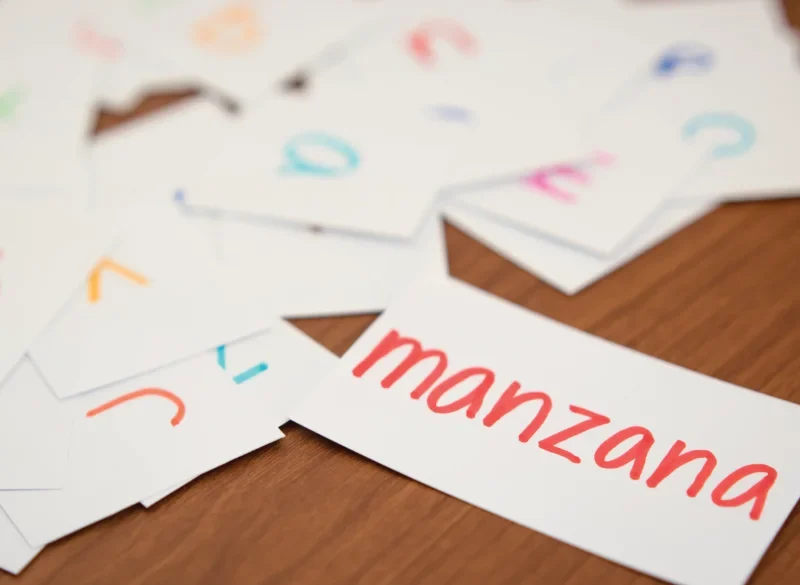
Spanish Classes
Providing an immersive experience in Spanish to build early language skills, enhancing cognitive flexibility and cultural awareness through fun, interactive activities.
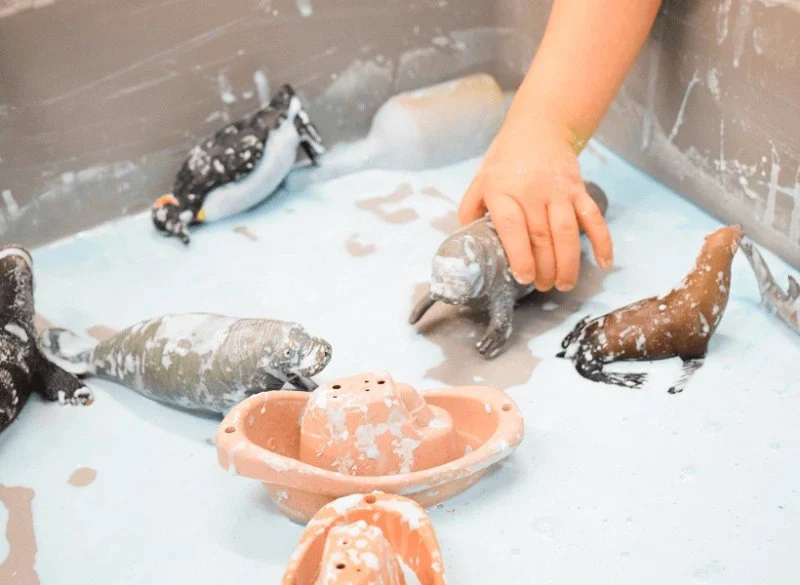
Sensory Exploration
Supporting children’s sensory development by engaging with materials and environments that stimulate sight, touch, sound, and movement, promoting inquiry and creativity.
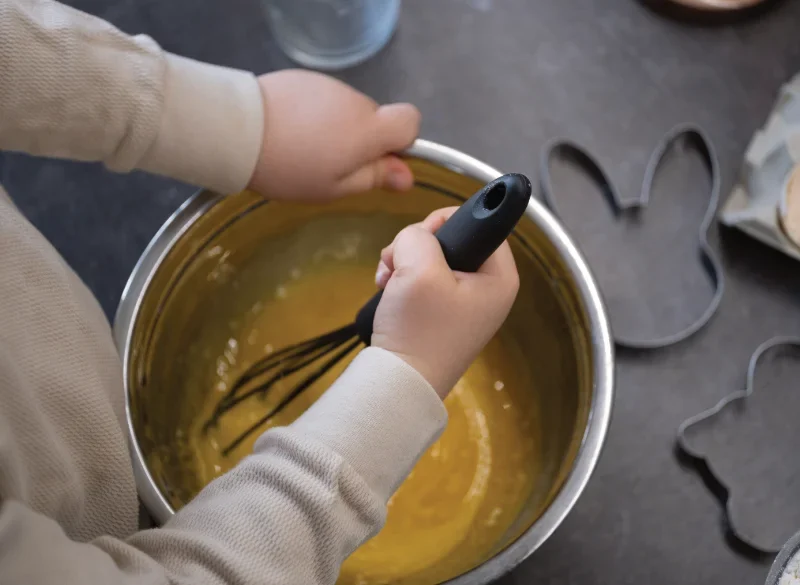
Cooking and Science
Offering hands-on, experiential learning opportunities that encourage curiosity and problem-solving while exploring the science of food, nutrition, and the world around us.
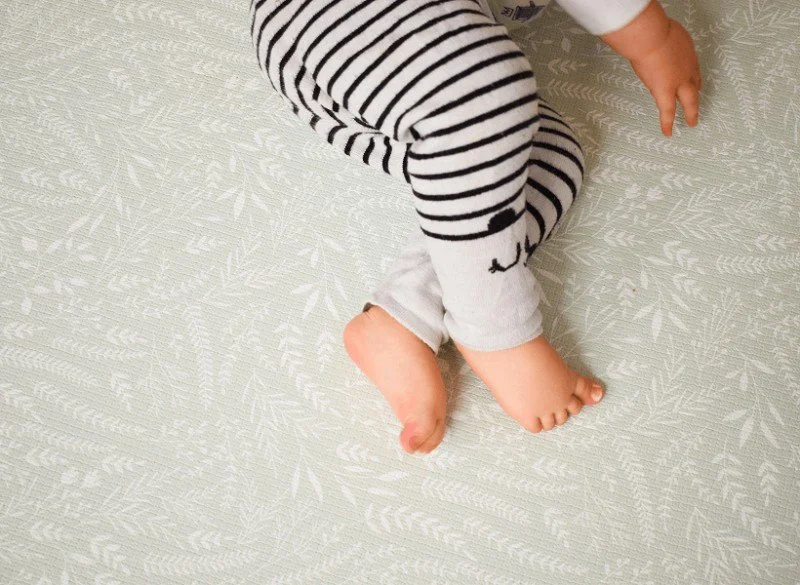
Yoga and Mindfulness
Fostering emotional regulation and self-awareness through mindful activities that help children connect with their bodies, manage emotions, and cultivate a sense of calm.
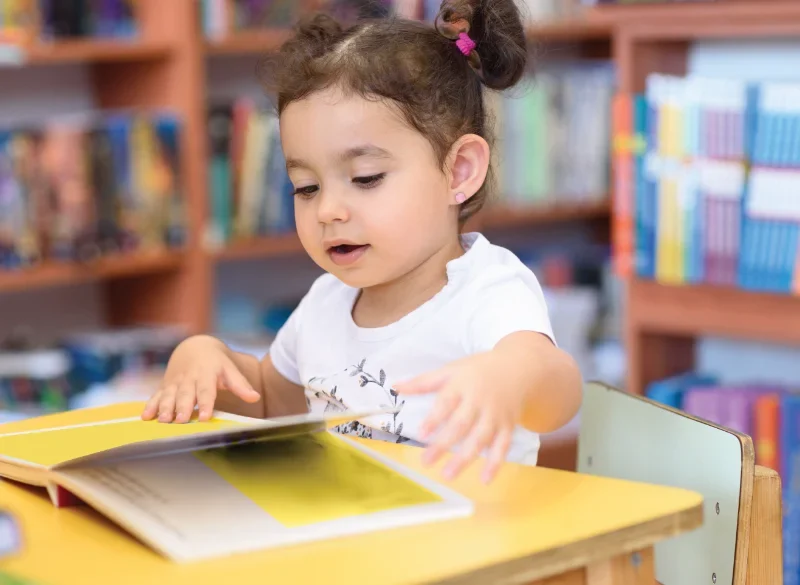
Outings
We love exploring beyond our nursery! Our outings include visits to the park, neighborhood walks, and trips to the library, giving children the opportunity to connect with their community, discover new environments, and engage in hands-on learning experiences.
How your child will learn

Babies are Ositos / Little Bears
Your baby is special to us, and we work carefully to ensure a gentle continuity from home to nursery. Our baby room is spacious and filled with soft furnishings and wonderful resources. With a staff ratio of 1:3, our team offers close attention and nurturing care throughout the day. In our calm, caring environment, little ones feel safe, loved and secure as they enjoy story times, singing, puppets, musical instruments and sensory experiences.
Toddlers are Ardillas / Squirrels
The toddler years are full of exciting growth — physically, socially, and emotionally. We understand your toddler is a busy explorer, eager to test their independence, language, and ideas. That’s why our toddler room is designed to be active, safe, and full of opportunities to learn through play. We introduce activities to meet their natural curiosity, growing energy and development, whether its pouring at a water table or stacking tumbling blocks.


Preschoolers are Linces/ Lynxes
The preschool years are a time of incredible growth, as your child becomes more independent, curious and ready to take on the world. Our preschool room is carefully designed to help your child grow in confidence, develop key skills, and foster a love for learning. Our experienced practitioners gently prepare each child for their transition to school, ensuring they move on with confidence and strong foundations for the future.

Multilingualism
The Gift of More Than One Language
Research has shown that bilingualism is beneficial for children’s development and their future. Children exposed to different languages become more aware of different cultures, other people and other points of view. But they also tend to be better than monolinguals at ‘multitasking’ and focusing attention.
They often are more precocious readers, and generally find it easier to learn other languages.
We operate under the ‘one person, one language’ system. Therefore, our Spanish-speaking teachers speak only Spanish to the children, and our English-speaking teachers speak only English to them. As a multilingual setting, we have children from many different nationalities. We identify a child as having English as an Additional Language (EAL) if they are exposed to a language other than English at home and do not have at least one parent or carer who speaks English with them regularly.
We believe every child is unique and constantly learning.
Our curriculum encourages independence, resilience, problem-solving, and social skills through a balance of child-led play and adult-guided experiences, helping children build strong foundations for lifelong learning.
Following the Early Years Foundation Stage (EYFS) framework, we support development through play and discovery across seven areas of learning. Each setting applies the principles of the EYFS to reflect the expertise of its team and the needs of its children.
Every day is filled with opportunities to learn and play
Children first develop in three prime areas:

1
Communication and language
2
Physical development
3
Personal, social and emotional development
These prime areas then lay the foundation for progress in four specific areas:
1
Literacy
2
Mathematics
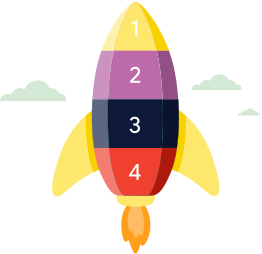
3
Understanding the world
4
Expressive arts and design
How your child will learn

Babies
Your baby is nurtured with warmth in a calm, caring environment where they feel safe, loved and secure. Each child builds a close bond with their Key Person, who takes time to understand their individual routines and personality.
Through gentle interactions, sensory play, songs, stories and familiar repetition, your baby begins to explore the world around them and develops early communication, movement and social skills.
Toddlers
The toddler years are full of exciting growth — physically, socially, and emotionally. We understand your toddler is a busy explorer, eager to test their independence, language, and ideas.
That’s why our toddler room is designed to be active, safe, and full of opportunities to learn through play.
Preschoolers
The preschool years are a time of incredible growth, as your child becomes more independent, curious and ready to take on the world.
Our preschool room is carefully designed to help your child grow in confidence, develop key skills, and foster a love for learning. Our experienced practitioners gently prepare each child for their transition to school, ensuring they move on with confidence and strong foundations for the future.
Nursery Curriculum
At our Anglo Spanish nursery school, our curriculum is based on the statutory Early Years Foundation Stage (EYFS) framework, with a unique bilingual approach that supports both English and Spanish language development alongside cognitive growth.
The foundation of all learning lies in the prime areas:
Communication and language, personal, social, and emotional development, and physical development.
In our baby and toddler rooms, we prioritise fostering language skills in both English and Spanish, supporting children as they build strong foundations for future learning. We also focus on personal development, social skills, emotional well-being, and physical growth, as these key areas support progress in other more specific learning areas, from maths and literacy to understanding the world around us and encouraging creativity through art and crafts.
We follow a learning through exploration and discovery approach inspired by the Reggio Emilia philosophy. In this approach, we see children as active participants in their learning journey. Each child is viewed as a “competent and curious learner,” whose natural drive for discovery is nurtured through interactions with their environment, peers, and adults. We provide rich, stimulating experiences where children engage with materials, ideas, and their surroundings to make sense of the world. Teachers act as facilitators, guiding and observing children’s learning, and using these insights to create meaningful experiences that reflect the children’s interests and ideas.
As children progress through the nursery, they begin to engage with Maria Montessori’s theory, which emphasises independent, self-directed learning. In our older classrooms, we introduce Montessori Project Sessions (“Manos a la Obra”), where children take ownership of their learning through hands-on, inquiry-based projects. These sessions encourage children to explore their interests in depth, fostering autonomy, responsibility, and critical thinking.
In the Montessori-inspired environment, children are provided with materials that support concentration, order, and exploration, helping them build confidence as independent learners. This blend of Reggio Emilia and Montessori provides a balanced and holistic approach to early childhood education, where creativity, curiosity, and independence are at the heart of every child’s learning experience.
As part of our comprehensive curriculum, we also offer a variety of specialist programmes designed to enhance early brain development and support the acquisition of important skills.
Forest School
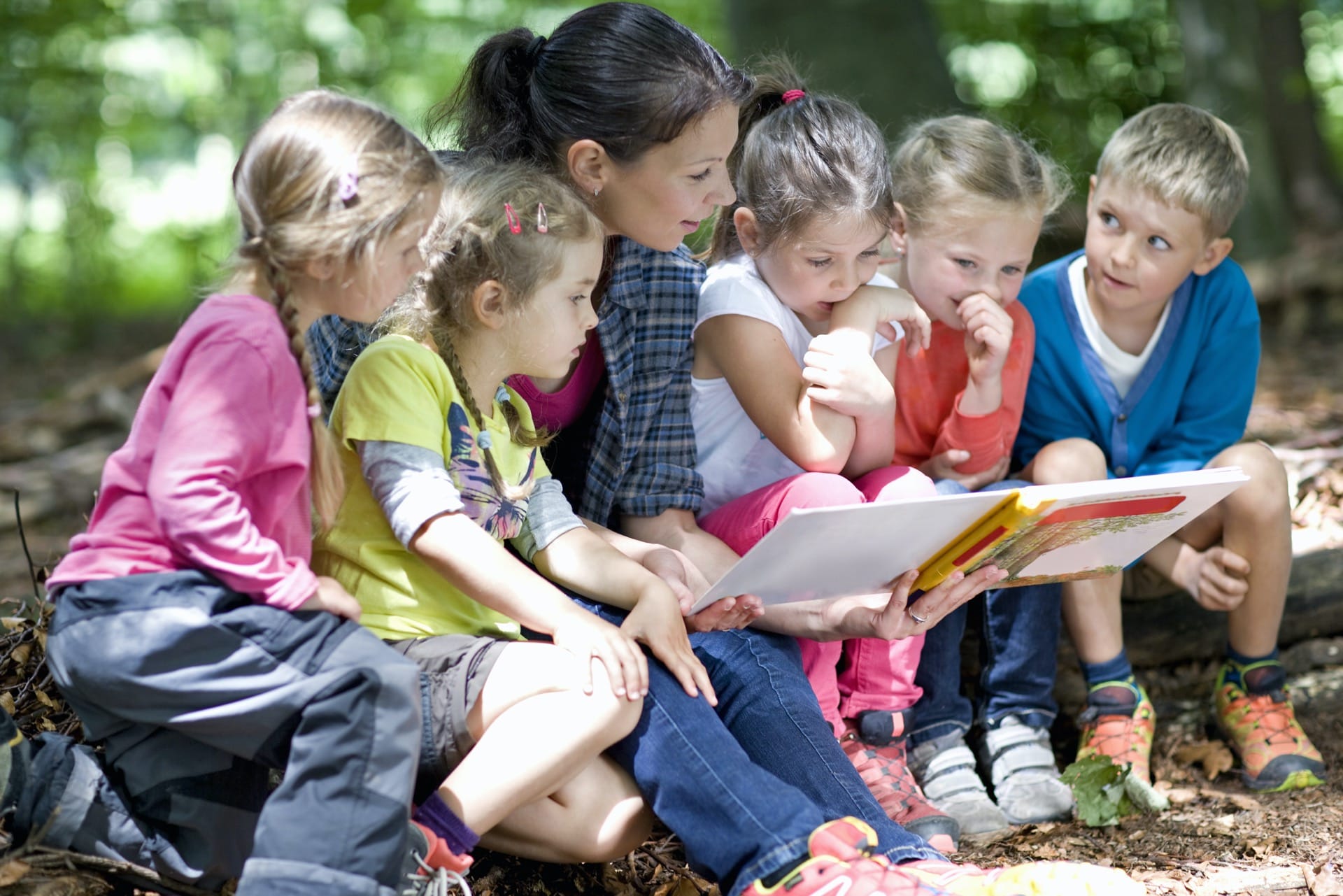
We are proud to offer Forest School sessions as part of our curriculum. Forest School is an approach to outdoor learning that originated in Scandinavia and is now widely recognised for its benefits in early years education. Children take part in regular sessions in a natural environment, supported by trained practitioners who ensure safety while encouraging independence and adventure.